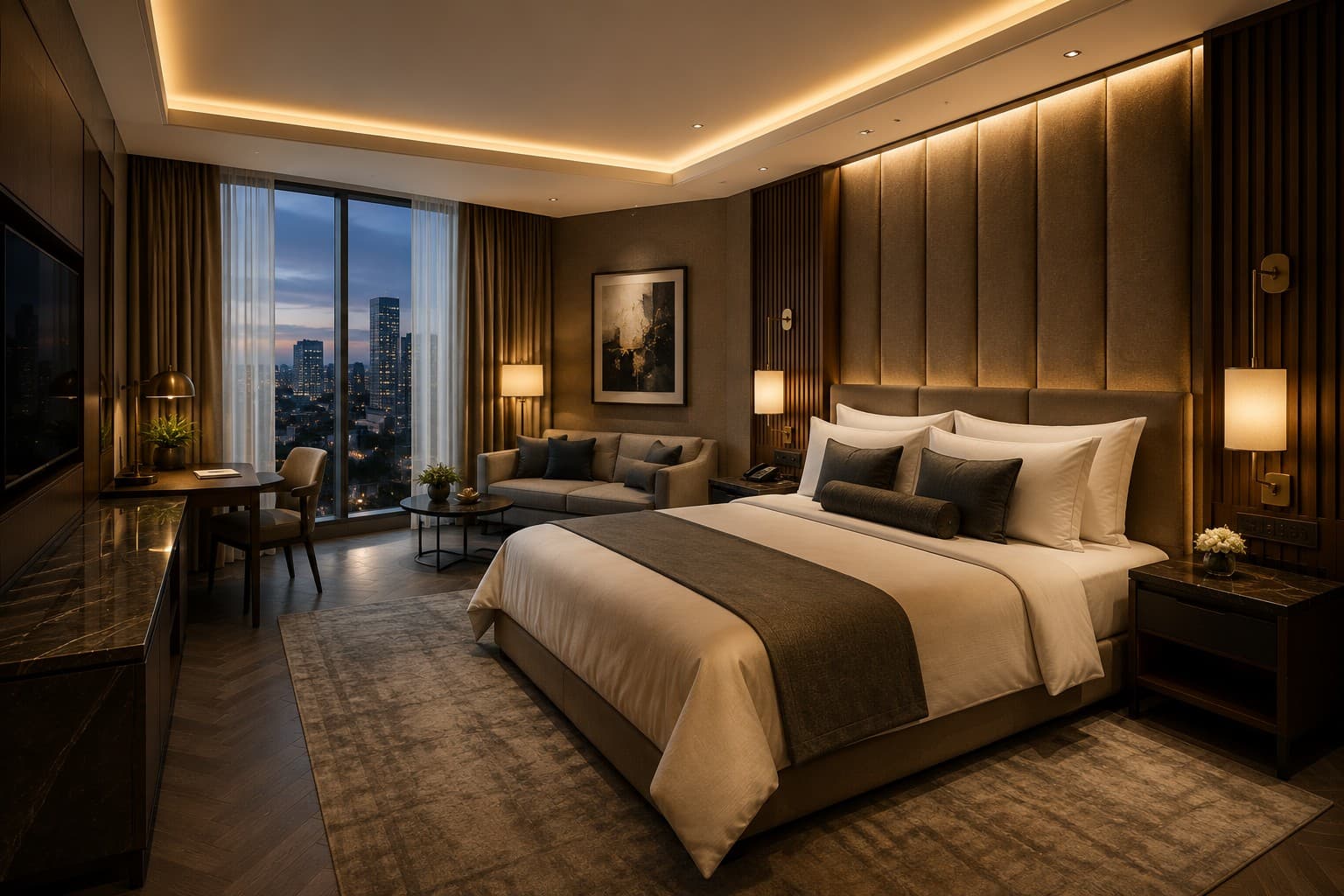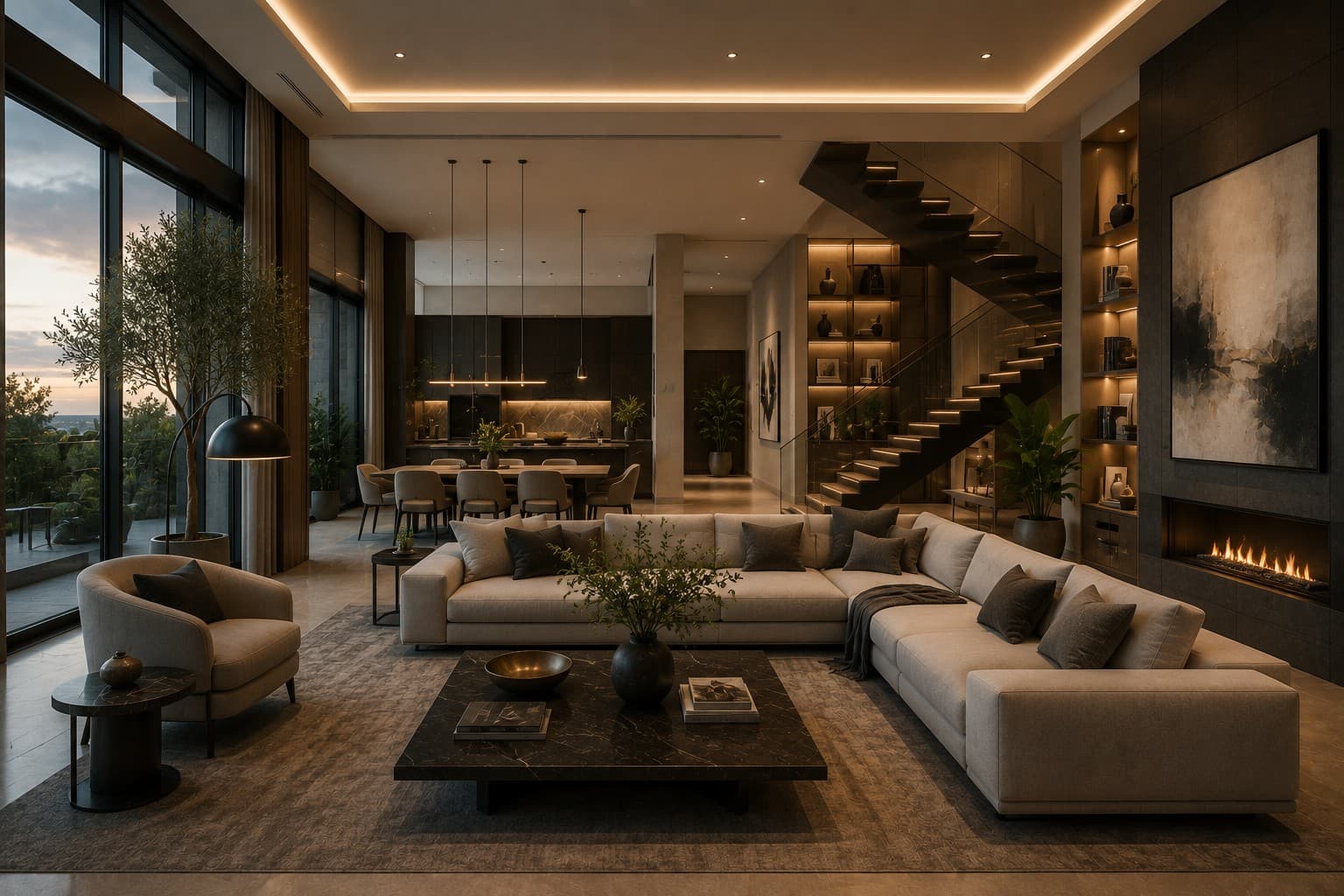
There is no universal list of “best coastal materials.” A finish that performs well in a fully enclosed, conditioned bedroom may fail quickly on a semi-open veranda only a few metres away. Good specification begins by defining the exposure zone, how the element will be cleaned and maintained, and what happens if it needs repair or replacement.
Divide the Project into Exposure Zones
Before selecting materials, separate fully internal air-conditioned rooms, naturally ventilated interiors, covered semi-outdoor spaces, wet areas and directly exposed external zones. Salt, humidity, ultraviolet light, wind-driven rain and temperature movement increase as the envelope becomes more open. The same visual finish can then be specified differently in each zone.
Metals, Hardware and Fixings
Door hardware, cabinet hinges, drawer runners, handles, lighting fittings, exposed screws, balustrade components and decorative metalwork are common corrosion points. The designer should confirm the metal grade or protective system with the supplier for the actual environment and should avoid mixing materials or fixings carelessly in exposed conditions.
For coastal hardware, review:
- Exposure level: internal, semi-open, wet or directly external.
- Base metal and protective finish, not simply the colour name.
- Compatibility of screws, brackets, anchors and other fixings.
- Manufacturer guidance for marine or high-corrosion environments where relevant.
- Cleaning products and maintenance intervals.
- Availability of replacement hinges, handles, runners and accessories.
Joinery, Timber and Engineered Boards
Moisture can affect natural timber and engineered boards through movement, swelling, edge failure, mould or deterioration of backing materials. Good performance depends on the substrate, board type, edge treatment, ventilation, wall condition, floor moisture and whether the joinery sits against an external or wet-service wall.
- Keep vulnerable board edges properly sealed and away from standing water.
- Allow airflow where cabinets sit in humid or poorly conditioned rooms.
- Resolve leaks, damp walls and wet screeds before installing joinery.
- Use suitable plinths, feet or detailing where cleaning water is expected.
- Consider how solid timber movement will be accommodated in doors, panels and tops.
- Record the finish system so future repairs can reproduce the intended appearance.
Floors, Walls and Wet Transitions
Porcelain and suitable stone finishes can be robust coastal choices, but slip resistance, grout, waterproofing, substrate movement and cleaning matter as much as the tile itself. At pool and garden transitions, the design should anticipate wet feet, sand and frequent cleaning. Highly porous or delicate finishes may still be appropriate in protected rooms but need a different maintenance conversation.
Fabrics, Upholstery and Window Treatments
Sun, humidity, sunscreen, wet swimwear and frequent guest turnover can be hard on fabrics. Removable covers, washable constructions, stain resistance and UV performance may matter more than an expensive textile label. In hospitality settings, the ability to replace one damaged panel or cushion without remaking the entire room can be commercially valuable.
Paints, Coatings and Decorative Finishes
Paint performance starts with a dry, stable substrate. No coating will compensate indefinitely for active moisture ingress or a wall that has not cured properly. In humid areas, the specification should consider washability, mould resistance where appropriate, adhesion, vapour behaviour and whether touch-up work can be matched later.
Lighting, Electrical Accessories and Equipment
Decorative lighting and electrical accessories are often chosen visually, but semi-open coastal spaces need appropriate product ratings and corrosion consideration. Equipment rooms and concealed cabinets also need ventilation; humidity and heat can shorten the life of electronics even when there is no direct rain exposure.
Local and Natural Materials Can Be Excellent—When Detailed Properly
Local stone, timber, woven fibres and artisan-made pieces can give a coastal project a strong sense of place and reduce dependence on imported decorative products. They should still be tested for the intended use, cleaning method and exposure. “Natural” does not automatically mean maintenance-free, just as “synthetic” does not automatically mean durable.
Design the Maintenance Plan at the Same Time as the Material Palette
| Ask | Why it matters |
|---|---|
| How is it cleaned? | Harsh or frequent cleaning can damage coatings, fabrics and sealants. |
| Can it be repaired locally? | Remote specialist repairs can create long periods of visible damage. |
| Can we buy it again? | Hospitality and rental properties benefit from repeatable products and documented alternatives. |
| What fails first? | The weak point may be a hinge, edge, sealant or fixing rather than the main material. |
| Who maintains it? | The specification should match the actual caretaker, housekeeping or facilities capability. |