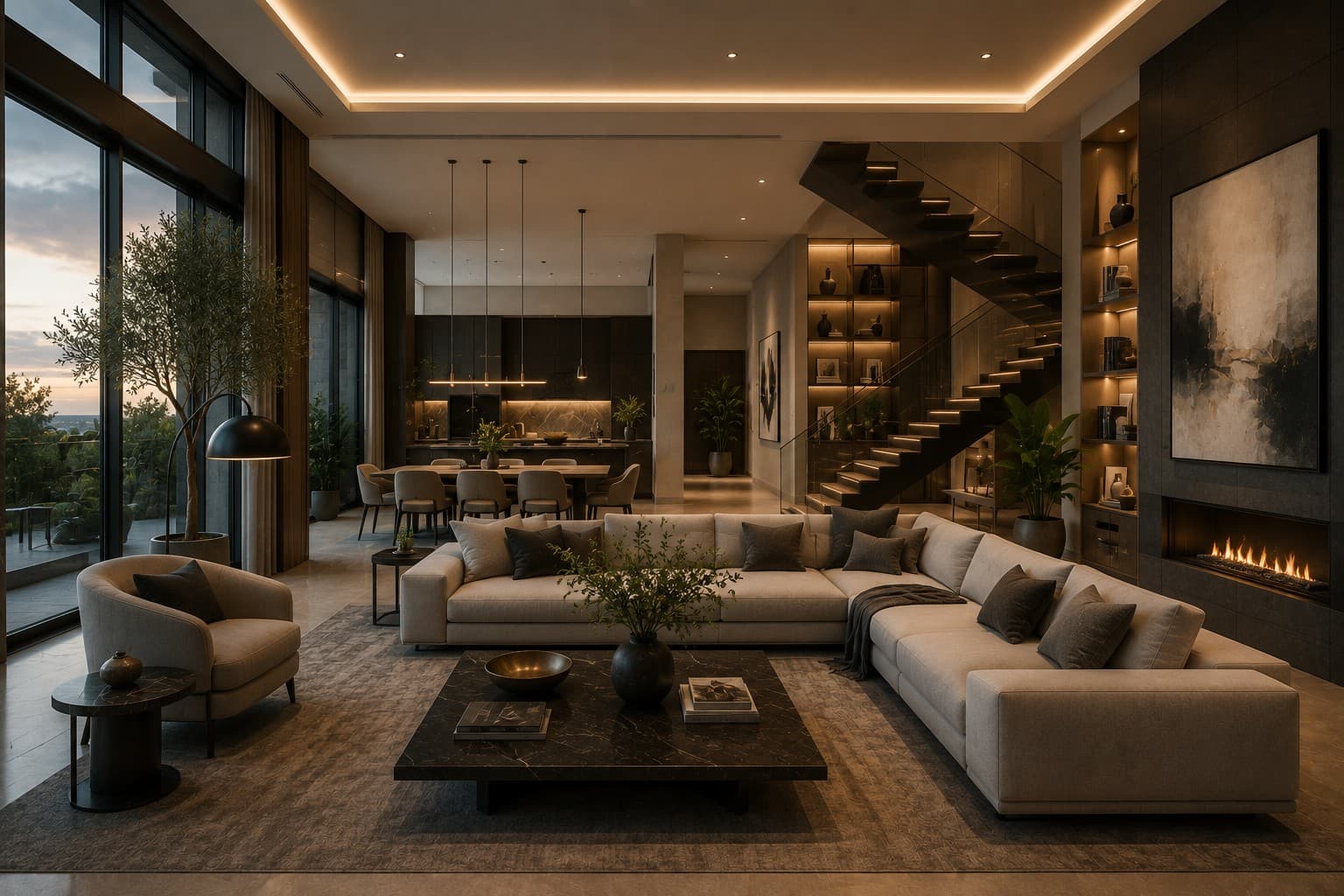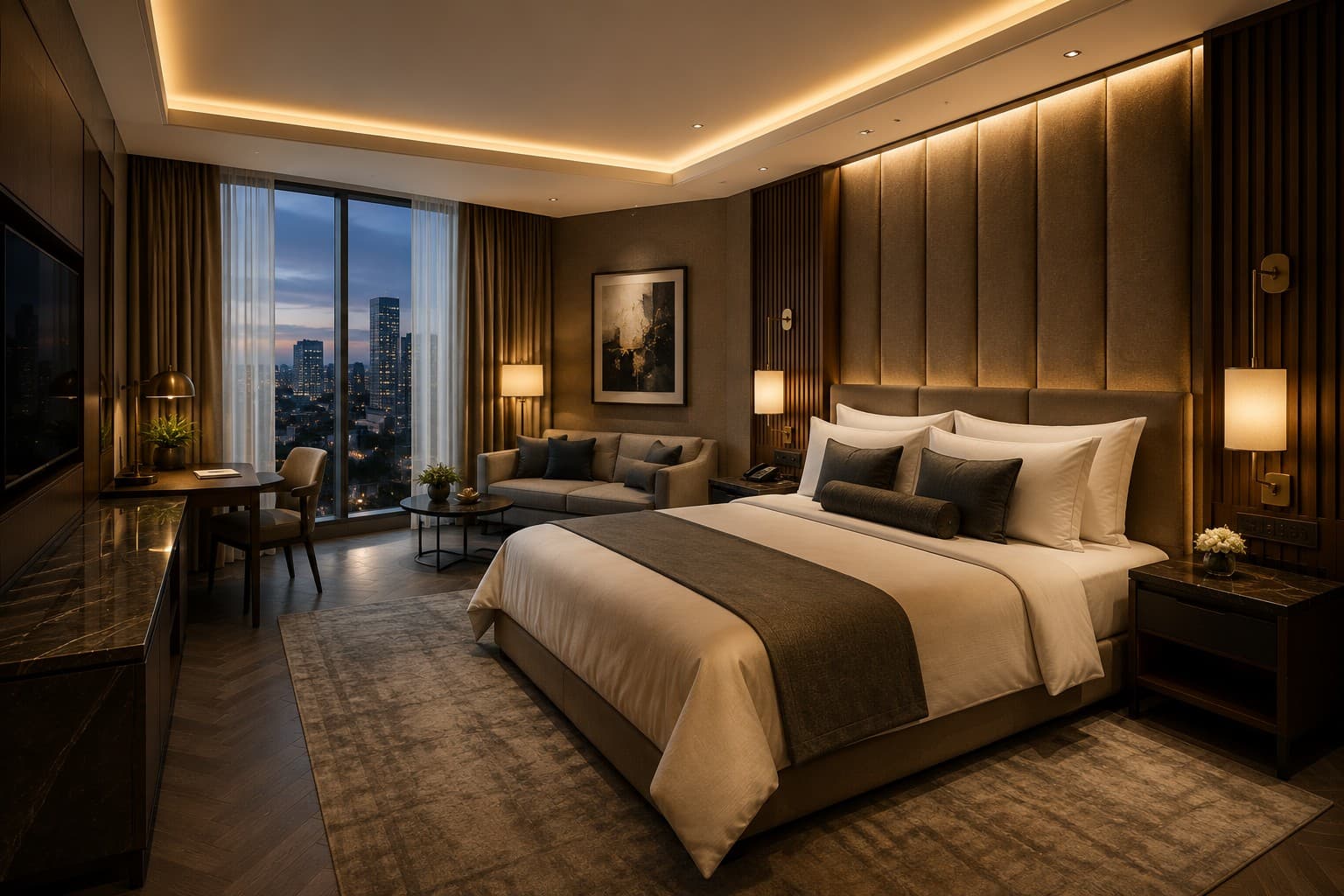
A hospitality interior is both a guest experience and an operating system. The brief must connect brand, arrival, guestrooms, food and beverage, leisure spaces and visual identity with housekeeping, storage, service routes, maintenance, staff operations and the commercial reality of running the property.
1. Define the guest and market position
- Target guest profile and reason for travel.
- Brand promise and desired emotional experience.
- Length of stay and typical occupancy patterns.
- Local, regional or international market expectations.
- Price positioning and service model.
- Whether the property is hotel, resort, villa, lodge, restaurant or mixed hospitality use.
2. Map the guest journey
Walk through the experience from arrival and check-in to guestrooms, restaurants, lounges, pools, wellness, event spaces and departure. Identify moments where orientation, shade, privacy, luggage handling, waiting, views or service interaction matter.
3. Brief operational flows behind the scenes
Housekeeping, linen, waste, food deliveries, room service, staff circulation, maintenance and storage should be resolved without unnecessarily crossing guest movement. Beautiful public areas become difficult to run when service routes are an afterthought.
4. Standardise what should repeat, customise what should differentiate
Guestroom types benefit from controlled standards for beds, wardrobes, luggage, lighting, sockets, bathrooms and housekeeping. Suites, villas and signature spaces can then introduce more bespoke elements without making every room a maintenance prototype.
5. Write coastal exposure into the specification brief
- Salt exposure and corrosion resistance.
- Humidity and mould risk.
- UV exposure and colour stability.
- Ventilation and drying after cleaning or rain.
- Outdoor fabrics and furniture performance.
- Hardware, fixings and metal finish durability.
- Ease of replacement and locally available maintenance materials.
6. Make maintenance part of the design review
Ask how each finish is cleaned, what damages it, whether replacements can be sourced and what the guest sees as it ages. Hospitality materials experience concentrated use, luggage impact, cleaning chemicals, food and beverage spills and frequent furniture movement.
7. Plan FF&E and procurement logistics
Furniture, lighting, fabrics, decorative items and equipment may come from multiple suppliers. For Coast projects, transport from Nairobi or imports can add lead time, handling and storage requirements. Procurement planning should identify samples, approvals, production, delivery and installation milestones.