Curzey
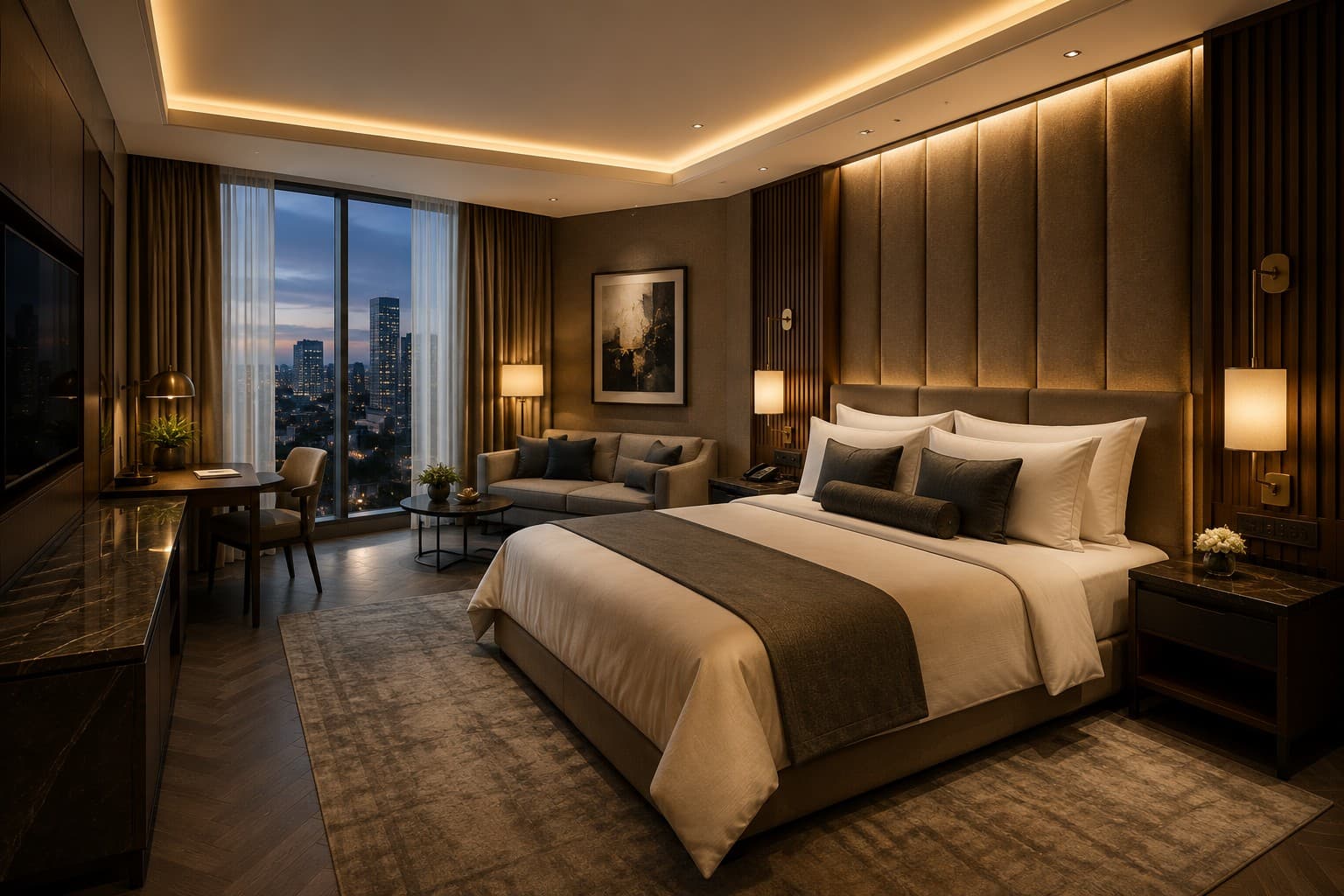
Warm hospitality interior representing Curzey hotel and guest-experience design in Kenya
← Sector expertise

Hospitality Interior Design

Hospitality spaces designed around guest experience and operational reality.

Curzey designs hospitality environments by connecting brand, arrival, guest comfort, durability, operations and the commercial realities of delivering and maintaining the space.

Experience focus

Guest journey + brand

Coastal focus

Kilifi + Kenya Coast

Design lens

Atmosphere + operations

Proof

Belva · Hennessy · Senera

01 · Guest journey

Hospitality design begins before the guest reaches the room.

Arrival, reception, waiting, circulation, social spaces, rooms, dining and outdoor transitions all contribute to how a guest remembers a property. The design should make those moments feel coherent rather than treating each area as an independent styling exercise.

A strong hospitality brief therefore connects brand position, target guest, service model, operational flows and the desired emotional character of the experience.

02 · Operations

Beautiful guest spaces still need housekeeping, storage, maintenance and service routes to work.

Operational planning influences back-of-house access, storage, linen, housekeeping, staff movement, food and beverage support, maintenance and guest privacy. These requirements should be resolved alongside the front-of-house concept, not hidden after design approval.

Materials, furniture and details also need to tolerate cleaning, turnover and concentrated use while remaining aligned with the property's positioning.

03 · Coastal hospitality

On the Kenya Coast, atmosphere and climate resilience have to be designed together.

Kilifi and the wider Coast add humidity, salt exposure, strong sunlight, indoor-outdoor living and marine-air corrosion to the design brief. Metals, hardware, joinery, fabrics, coatings and external interfaces need to be selected with those conditions in mind.

Hospitality properties also benefit from passive comfort, shaded transitions, ventilation and materials that age well rather than requiring constant cosmetic correction.

04 · Delivery + procurement

Procurement strategy matters when the project is far from the main supplier base.

Coastal projects often involve a mix of local sourcing, Nairobi procurement, custom fabrication and specialist imports. The project programme should account for approvals, samples, lead times, consolidation, transport, storage and replacement risk.

Early schedules for FF&E, lighting, sanitaryware, joinery hardware and specialist finishes can reduce late substitutions that weaken the design or delay opening.

Locations

Connect sector expertise with local project conditions.

Frequently asked questions

Useful answers before you start.

Does Curzey provide hospitality interior design on the Kenya Coast?

Yes. Kilifi is a priority coastal market and Curzey's coastal approach considers climate, material durability, indoor-outdoor living, procurement logistics and the operational requirements of hospitality and residential projects.

What should be considered when selecting hotel interior materials at the Coast?

Consider humidity, salt exposure, UV, cleaning, guest turnover, maintenance capacity and replacement availability. Metals, hardware, timber and board products, fabrics, coatings and adhesives should be specified for the actual exposure conditions rather than selected on appearance alone.

Can hospitality projects be delivered through design-and-build?

Yes, where the procurement strategy suits an integrated route. The project still needs clear approvals, cost control, FF&E schedules, technical coordination and quality review so programme pressure does not dilute the design intent.

Start with project intelligence

Bring the brief, budget, programme and sector requirements into one conversation.

Your next space

Ready to buildsomething exceptional?

Bring us your challenge, ambition or early idea. We'll help you move from questions to clear, confident design and delivery decisions.